Skip to product information
1 of 7
Low Stock
Shipping now

Key Lime Bush

The legendary sweet-tart citrus behind the world's most famous pie

Height
Trusted by 4M+ Gardeners
Grow Guarantee
Fast Shipping
Secure
Shipped from Asheville, NC

About the Variety

New

Key Features

Heat Tolerant
Attracts Bees
Attracts Butterflies
Container Friendly
Fragrant
Edible
Challenging but Rewarding

Plant Details

LIFE CYCLE

  • Perennial

SEED TYPE

  • Live Plant

LIGHT REQUIREMENT

  • Full Sun

BLOOM SEASON

  • Spring
  • intermittent blooms year-round

GROWTH HABIT

  • Compact Bush
  • Upright

COLOR

  • Green
  • Yellow

MATURE SIZE

  • 6-12 ft. x 4-8 ft.

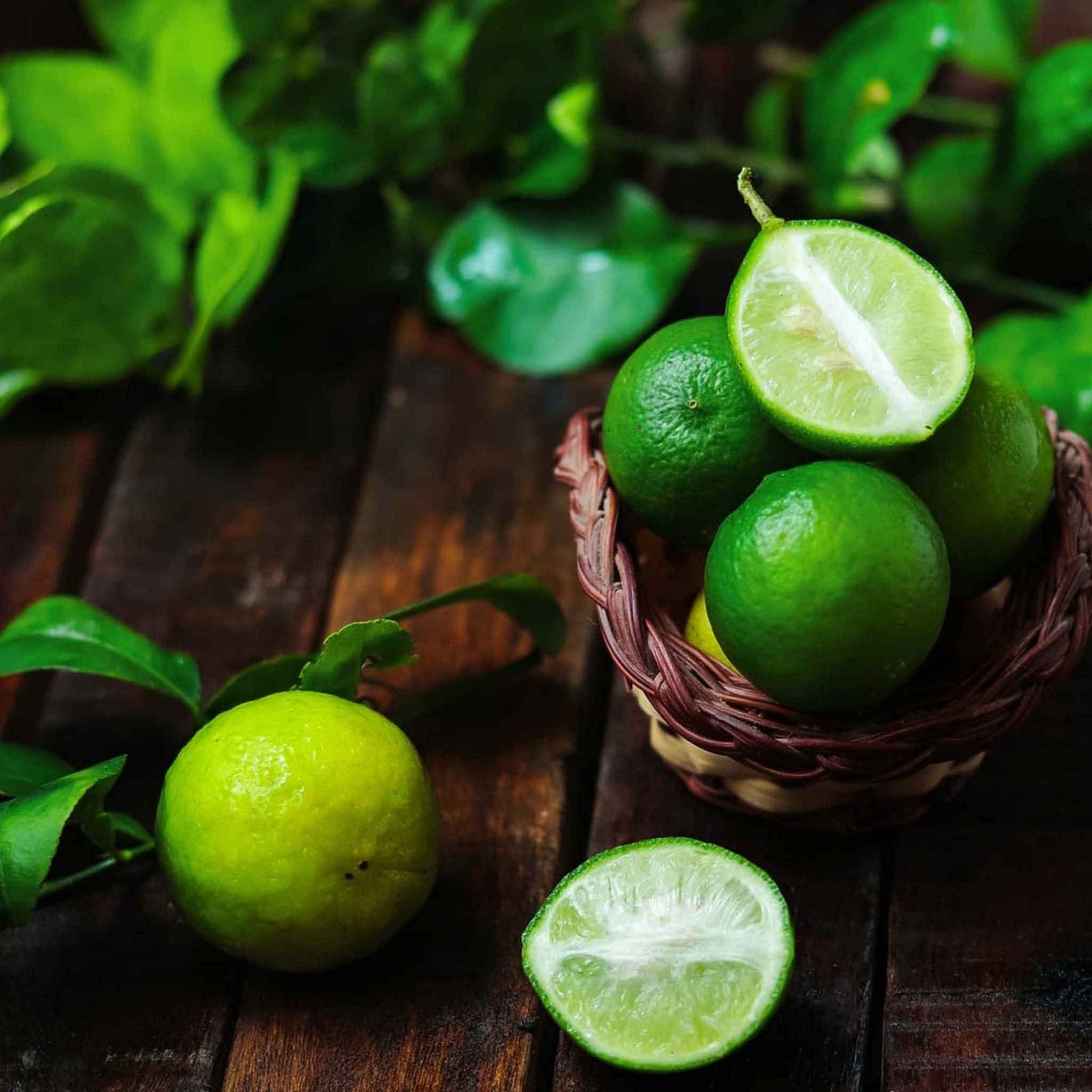
Also known as the Mexican lime, West Indian lime, or bartender's lime, the Key lime delivers a flavor that ordinary grocery store limes simply can't match. Its small, round, golf ball-sized fruit ripens from deep green to soft yellow, with a thin, smooth rind and exceptionally juicy flesh. Bright, intensely aromatic, and unmistakably tart with subtle floral notes, its flavor is bolder and more complex than the larger, milder Persian limes found in supermarkets. One taste explains why authentic Key lime pie, classic margaritas, mojitos, and fresh ceviche all call for the real thing, and why there's simply no true substitute. The Key Lime Bush has fuller branching closer to the base, giving it a dense, shrub-like appearance.

Frost-tender and tropical at heart, Key lime thrives outdoors in warm climates and adapts beautifully to container growing, spending summers in the sun and winters in a bright indoor location wherever temperatures dip below freezing.

This item is excluded from coupon codes and site-wide promotions.

Available across most of the U.S. — except AK, AL, AZ, CA, FL, GA, HI, LA, OR, TX.

  • • In warm zones, this tree flowers and fruits almost continuously
  • • Small, sweet-scented flowers perfume a patio or sunroom long before the fruit ripens
  • Compact and forgiving of root confinement, thrives in a container

Planting Information

PLANTING SEASON

  • Spring
  • Summer
  • Fall

PLANTING DEPTH

  • Plant at the same depth as the container

WATER NEEDS

  • Average

PLANT SPACING

  • 6 to 10 feet

HARDINESS ZONES

  • 8
  • 9
  • 10
  • 11

Planting Guide

recommended growing zone View our Key Lime Plants Planting Guide to learn more

Companion Plants

1 of 3

Key Lime Bush FAQs

How is a Key lime different from the limes at the grocery store?

Most store limes are Persian, or Tahiti, limes which are large, seedless, and comparatively mild. Key limes are a different species: small and round with a thin rind, lots of seeds, and a sharper, more floral, intensely aromatic juice. That distinctive perfume is exactly why authentic key lime pie, ceviche, and classic cocktails call for this lime specifically.

Should I pick the limes green or wait until they turn yellow?

Either works, but for flavor most growers pick them green to deep green, when the juice is brightest and most tart. Left on the tree, Key limes ripen fully to a pale yellow and turn a little softer and sweeter. They keep best on the tree, so harvest a few at a time as you need them.

Can I grow a Key lime indoors or in a cold climate?

Yes, in a container. Key limes are the most frost-tender common citrus and are damaged below about 30°F, so outside of zones 9b–11 grow yours in a pot that summers outdoors and overwinters inside. Give it the brightest window you have or a grow light, and bring it in before the first frost.

Do I need a second tree to get fruit?

No. Key limes are self-fertile, so one tree will produce on its own. Outdoors, bees do the pollinating; for an indoor plant, gently move pollen from flower to flower with a small soft brush to boost the number of limes that set.

Why are the leaves yellowing or the fruit dropping?

Yellow leaves usually mean a watering or feeding problem. In this case, let the top inch of soil dry between waterings and confirm the pot drains freely, since soggy roots are the most common culprit. Pale leaves with green veins signal a micronutrient shortage; feed with a citrus fertilizer containing iron, zinc, and manganese. A little fruit drop after flowering is normal as the tree sheds what it can't carry, but heavy drop often follows cold drafts, drought stress, or a sudden change in light.

What can I make with Key limes?

This is the lime for the classics. Its juice is the soul of real key lime pie, and it brightens margaritas, mojitos, daiquiris, ceviche, guacamole, and Southeast Asian curries and dressings. The fragrant zest adds depth to baked goods and marinades, and a quick squeeze lifts grilled fish, tacos, and chicken far beyond what an ordinary lime delivers.

Grown by Our Community • All citrus

    1 of 0