Skip to product information
1 of 7
Low Stock
Shipping now

Honeycrisp™ Apple Tree

Explosively juicy, honey-sweet, and famous for a snap you can hear

Height
Trusted by 4M+ Gardeners
Grow Guarantee
Fast Shipping
Secure
Shipped from Asheville, NC

About the Variety

New

Key Features

Frost Tolerant
Attracts Bees
Fragrant
Edible
Challenging but Rewarding

Plant Details

LIFE CYCLE

  • Perennial

SEED TYPE

  • Live Plant

LIGHT REQUIREMENT

  • Full Sun

BLOOM SEASON

  • Spring

GROWTH HABIT

  • Upright

COLOR

  • Red
  • Yellow

MATURE SIZE

  • 8-10 ft. x 8-10 ft.

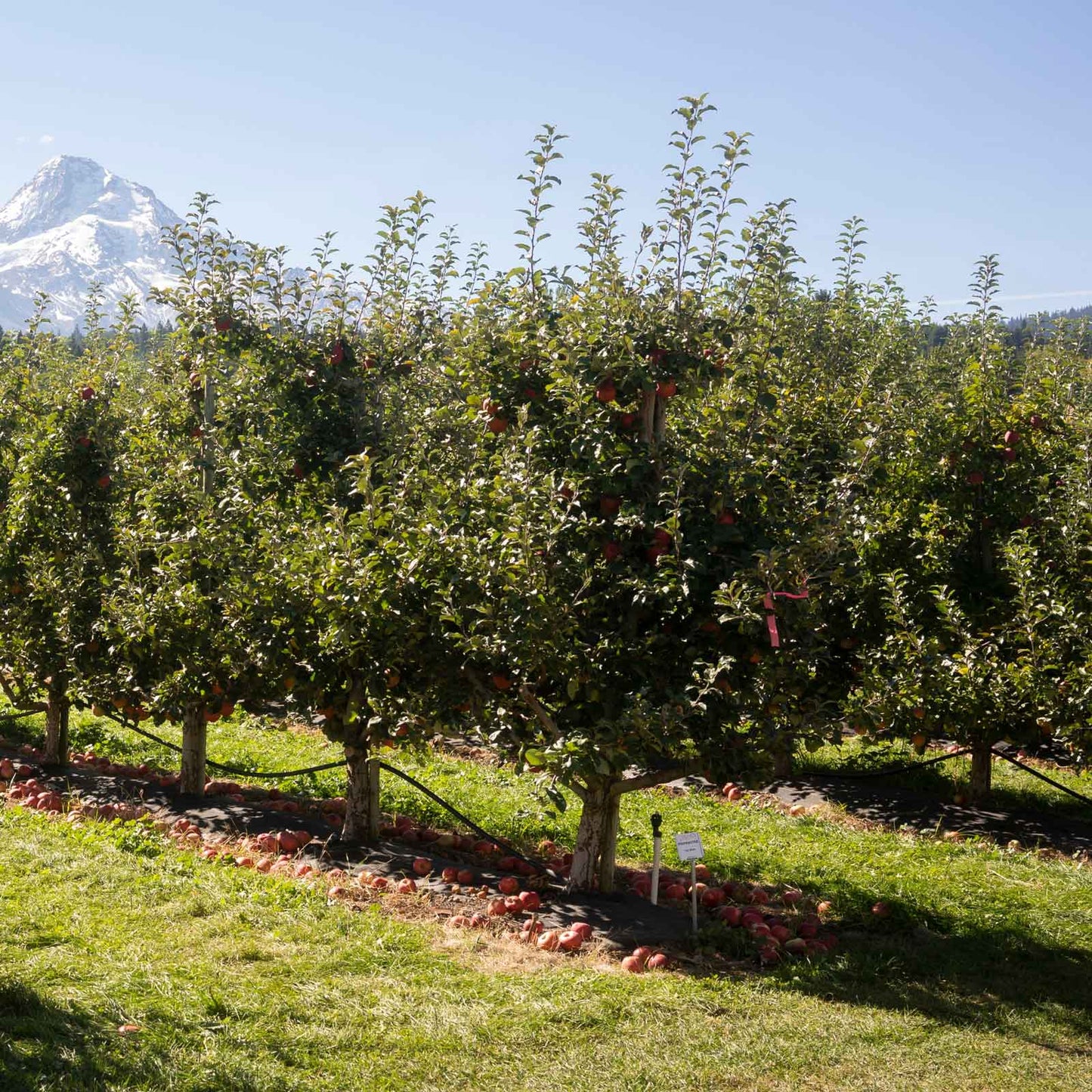
The apple that made “crisp” a selling point, Honeycrisp delivers an irresistible crunch followed by a burst of juicy, honey-sweet flavor balanced with bright tartness. Bred for cold climates, the Honeycrisp Apple Tree produces beautiful red-blushed fruit with creamy white flesh that holds its texture exceptionally well. Reaching just 8 to 10 feet at maturity, it fits beautifully into backyards and smaller landscapes while producing outstanding apples for snacking, salads, and baking.

This item is excluded from coupon codes and site-wide promotions.

Available across most of the U.S. — except AK, AZ, CA, HI, ID, OR, WA.

  • • Eat straight from the tree or add to salads, slaws, and pies
  • • Genuinely cold-hardy, bred in Minnesota for harsh winters
  • Needs a pollinating partner; plant a different but compatible apple variety nearby to set fruit

Planting Information

PLANTING SEASON

  • Spring
  • Fall

PLANTING DEPTH

  • Plant no deeper than the root ball

WATER NEEDS

  • Average

PLANT SPACING

  • 8 to 10 feet

HARDINESS ZONES

  • 4
  • 5
  • 6
  • 7
  • 8

Planting Guide

recommended growing zone View our Apple Tree Planting Guide to learn more.

Companion Plants

1 of 3

Honeycrisp™ Apple Tree FAQs

How does Honeycrisp taste, and what makes it different?

It pairs high honeyed sweetness with enough tartness to stay lively, but the real signature is texture. Its cells are unusually large and rupture on the bite, so it crunches and floods with juice in a way most apples don't. The flesh stays crisp and white rather than turning soft or mealy.

Do I need a second tree to get apples?

Yes. Honeycrisp is not self-fertile and needs a compatible pollinator nearby to set fruit. Plant another mid-season apple variety or a flowering crabapple within about 50 feet so bees can carry pollen between them while both are in spring bloom.

How soon will it bear fruit?

Most young Honeycrisp trees begin producing within about three to five years of planting, depending on rootstock and growing conditions. Trees on dwarfing rootstock often fruit sooner. Removing any blossoms the first year helps the tree put energy into roots and structure.

Can I grow it in a container or a cold climate?

Cold is its strength, it was bred in Minnesota and is hardy to zone 4. On dwarfing rootstock it can be grown in a large container; in the coldest zones, move the pot to an unheated garage or sheltered spot for winter, since container roots are more exposed than those in the ground.

Why are my apples getting brown sunken spots?

That is most likely ‘bitter pit,’ a calcium imbalance Honeycrisp is known for, not a disease. It usually traces back to uneven watering, over-fertilizing with nitrogen, or oversized fruit. Keep soil moisture steady, go easy on nitrogen, and thin to one apple per cluster to keep fruit a moderate size.

When and how do I harvest?

Honeycrisp ripens in September. Look for the ground color shifting from green toward yellow and fruit that releases with a gentle upward twist rather than a hard pull. Pick over several visits as apples ripen; cooled and stored, Honeycrisp holds its crunch and flavor for months.

Grown by Our Community • All apple trees

    1 of 0